Briefing Session on Development of Digital System to Strengthen Management of Public Buildings
The Government is developing a Government Building Management Information System (GBMIS) to enhance the efficient, transparent and accountable management of public buildings and other government facilities across the country.
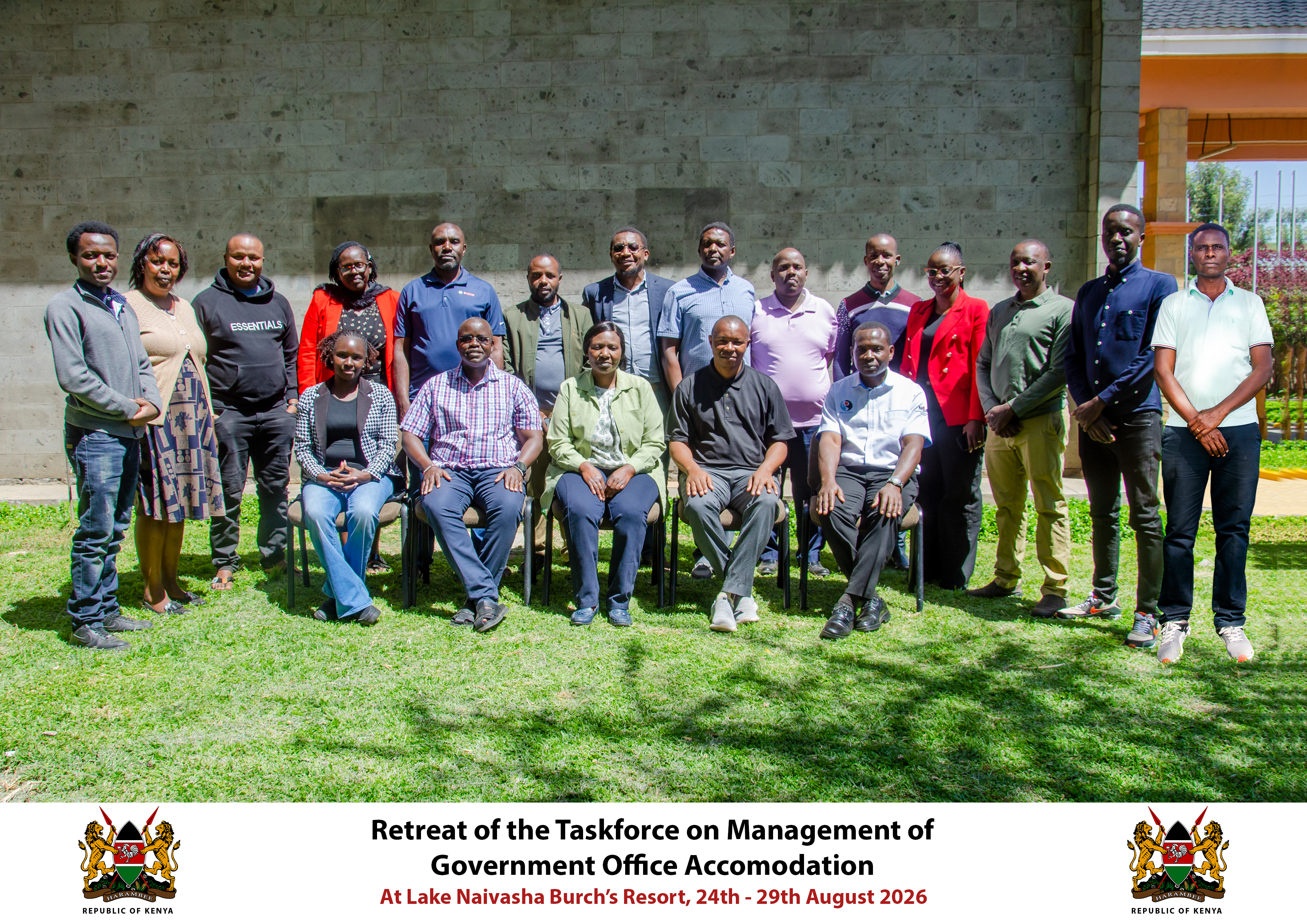
The Deputy Head of Public Service, Mr. Amos Gathecha, Principal Secretary for Public Works,Mr. Joel Arumonyang, Principal Secretary, Public Investments & Assets Management Dr. Cyrille Odede Wagunda were earlier today briefed on the progress made towards the development of government buildings management information system.
The digital system is expected to provide a centralized and up-to-date database of government buildings and leases among them leased buildings and leased parking spaces capturing critical information including their location, ownership, condition, utilization, maintenance requirements and intervention history.
The initiative will strengthen the Government’s ability to plan and undertake preventive maintenance, enabling timely interventions before minor defects escalate into costly repairs and major rehabilitation works.
Through the system, government institutions will have access to reliable information to support evidence-based decisions on the maintenance, rehabilitation, refurbishment, utilization and overall management of public buildings.
The GBMIS will also facilitate better prioritization and allocation of public resources by providing information on the condition and maintenance needs of government facilities. This is expected to promote value for money, reduce duplication of interventions and improve accountability in the management of maintenance programmes.
Importantly, the system will contribute to safeguarding and optimizing the Government’s property portfolio by ensuring that public buildings are properly monitored and maintained throughout their useful life.
The development of GBMIS is part of the Government’s broader digital transformation and public asset management agenda, aimed at leveraging technology to improve efficiency, strengthen accountability and enhance service delivery to citizens.
By transitioning from a predominantly reactive approach to building maintenance towards proactive, data-driven asset management, the Government will be better positioned to anticipate maintenance needs, extend the lifespan of public buildings and ensure that public assets continue to support effective delivery of government services.
The system is therefore expected to serve as an important tool for strengthening public asset management portfolio and ensuring that Government buildings are managed as strategic public resources for present and future generations.