Building Fair Futures Toolkit Launch and She Builds Sustainably: Advancing Justice and Climate Resilience in Kenya’s Built Environment
With women representing less than 3%1 of Kenya's construction workforce according to the National Construction Authority, and 55% excluded from formal financial services,2 the built environment sector faces a dual crisis of gender inequity and missed economic opportunity. At a time when Kenya urgently needs to build 200,000 homes annually with climate-resilient designs, excluding half the population from the workforce is not just unjust, it is unsustainable.
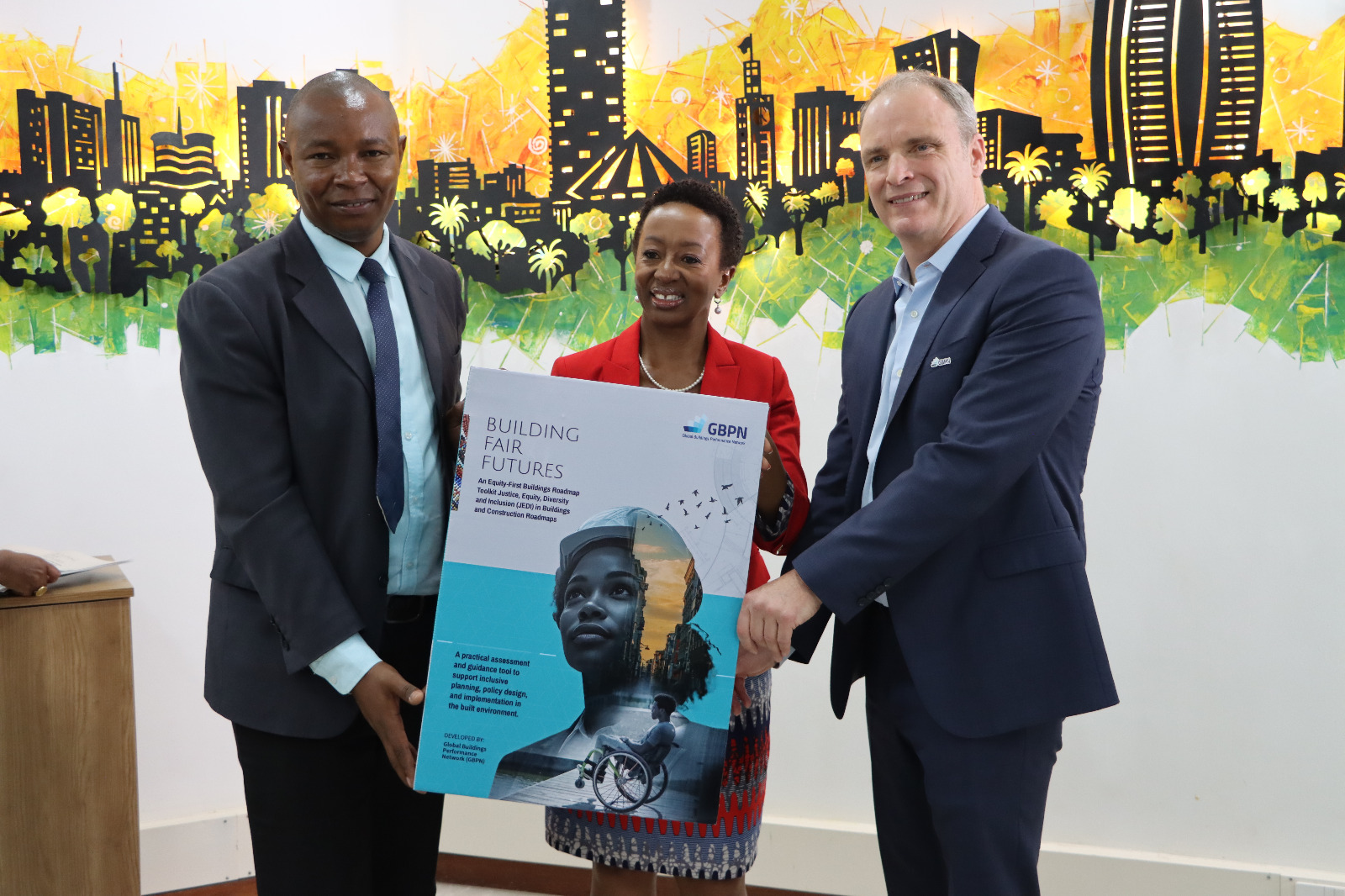
The industry is taking decisive action. Today, the Global Buildings Performance Network (GBPN), in partnership with the National Construction Authority (NCA), State Department of Public Works, Women in Real Estate (WiRE), the Architectural Association of Kenya (AAK), launched the "Building Fair Futures", a landmark initiative introducing a Justice, Equity, Diversity and Inclusion (JEDI) Toolkit and the She Builds Sustainably Training programme.
The convening that took place at the KBRC Auditorium in Nairobi, brought together sector leaders. Eva Muraya, Founder and Chief Executive Officer, BSD Group, in her keynote speech recognized women not as beneficiaries but as leaders. “The question is no longer whether women should be included in sustainable construction. It is how quickly we can remove the barriers that keep them out.”
The toolkit and training ensures the construction sector is not only decarbonized, but also democratized. “For too long, we have talked about sustainable buildings without talking about who builds them,” says Ms. Patience Mulondo, President, Women in Real Estate. She noted that a just transition in the sector is not just if some beneficiaries are left out of decision-making spaces.
“Globally, the transition to zero-carbon buildings must also be a transition toward equity. Kenya is helping demonstrate what that looks like in practice,” said Dr. Peter Graham, CEO, GBPN.
Kenya’s built environment sits at the intersection of climate change, housing demand, workforce development, and social inclusion. While decarbonization policies and investments are advancing, systemic barriers continue to exclude women, youth, persons with disabilities, and low-income communities from decision-making processes and economic participation.
“Climate action and social justice must advance together. We cannot achieve the 1.5°C pathway if half the population is locked out of the solutions.” - Ms. Mugure Njendu, Africa Programs Lead, GBPN.
For any enquiries,3kindly direct them to rehema.kabare@gbpn.org and marsha@terracottamoon.com.
1 DRC.CRDI (2025) Breaking ground to empower women in the Kenyan Construction Industry.
2 Data2x, Financial Alliance for Women (2022) Towards Women’s Financial Inclusion: A Gender Data Diagnostic of Kenya.